
|
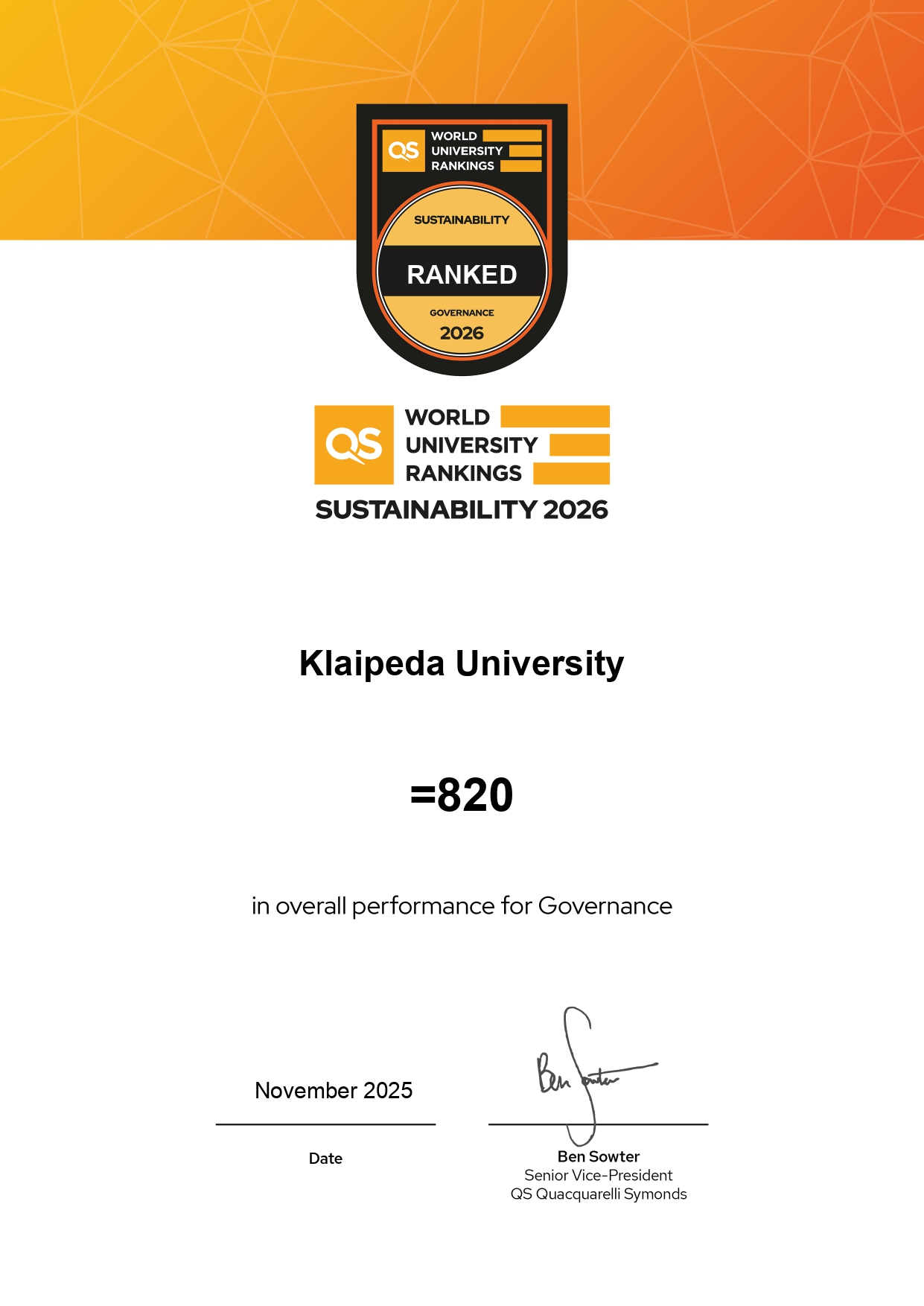
In the Sustainability Ranking, KU advanced from the 1401–1450 band to the 1201–1250 band, and in the European context it jumped by more than 60 places, currently ranking 425th. KU’s overall sustainability score increased by approximately 40%, from 33.2 to 46.2 points. Comparing the results across all sustainability categories – Environmental Impact, Social Impact, and Governance – and their thematic indicators, KU improved in every area, with growth ranging from 1.16 to 4.5 times, or from 16% to as high as 353%. The most remarkable increase was recorded in the Environmental Sustainability indicator, which grew by an impressive 353%. Strong positive dynamics were also observed in Equality (+61%), Knowledge Exchange (+36%), and Health & Wellbeing (+31%). KU’s highest scoring areas were Governance (70.8), Environmental Research (64.3), and Equality (51). Globally, KU ranks in the top 1,000 universities in two out of three sustainability categories (out of 2,002 evaluated institutions): it holds 820th place in the Governance category and 966th place in Environmental Impact. |
 |
|
KU as an Active Innovator in Sustainability KU’s improving results show that the university is consistently addressing sustainability challenges. One of the most significant milestones occurred in 2019, when KU became a member of EU-CONEXUS – the European University alliance dedicated to the sustainable development of smart coastal cities. The university also initiates internationally recognized innovative projects. One such initiative is InnoAerogel, a sorbent developed from an idea conceived at KU’s scientific facilities and advanced to a patented biotechnological solution. Moreover, KU contributes to national-level strategic initiatives: the university is involved in the development of Lithuania’s carbon capture, utilization, and storage (CCUS) platform and actively participates in the activities of the national Climate Change Committee. QS Sustainability Rankings – A Widely Recognized Standard for Assessing University Sustainability The QS World University Rankings: Sustainability are among the world’s most important rankings evaluating how universities contribute to sustainability, social justice, and responsible governance. Unlike traditional university rankings, which primarily focus on academic performance, QS sustainability rankings assess institutional activities across three categories – Environmental Impact, Social Impact, and Governance – and eight thematic indicators: Environmental Research, Environmental Education, Environmental Sustainability, Equality and Access, Health & Wellbeing, Knowledge Exchange, Education Impact, Employability & Opportunities. |
.jpg) |


